
SCRMET
Evolving gas price trends
DECARBONIZATION
06.05.2026
06 May, 2026
Gas-on-gas (GOG) competition, under which natural gas prices are set through the interaction of supply and demand rather than external indexation, represented almost half of global gas consumption in 2024, broadly unchanged from the previous year, according to the International Gas Union (IGU)’s latest Wholesale Gas Price Survey.
The survey shows that GOG’s share of global consumption increased steadily from 31.5% in 2005 to 49.1% in 2024, largely displacing oil-price escalation (OPE) mechanisms, where gas prices are linked to oil or competing fuels through base prices and escalation clauses. Over the same period, the share of OPE pricing declined from 24% to 18.5%.
The expansion of GOG pricing in LNG markets has been a major contributor to this shift in recent years. This has been driven by the growing prevalence of Henry Hub-linked long-term contracts, reflecting the US’ emergence as the world’s largest LNG exporter, alongside a greater role for spot LNG transactions.
GOG’s share surged to a record 50.1% in 2022 in the wake of global price shocks. This reflected India’s move to OPE-based domestic pricing and subdued gas demand in Europe, developments that were partly counterbalanced by stronger spot LNG inflows into both Europe and China. The GOG share subsequently eased to 49.3% in 2023.
Pricing mechanisms continue to vary widely by region. The bulk of the rise in GOG and the decline in OPE between 2005 and 2017 occurred in Europe, where liberalisation and market reforms led to the near- elimination of OPE in Northwest and Central Europe. Residual pockets of OPE remain in Turkey, parts of Southeast Europe, and in Spain and Portugal.
In 2024, GOG pricing accounted for 82% of European gas consumption, covering almost all domestic output, around 80% of pipeline imports and 78% of LNG deliveries. By contrast, when the IGU conducted its first survey in 2005, the UK was the only European market with a significant level of GOG pricing.
Outside Europe, GOG predominates in North America and Oceania, as well as in a small number of other markets including Chile, Colombia, Morocco and Nigeria. OPE pricing remains dominant across much of Asia, notably in Malaysia, Vietnam and the Philippines, where it is mainly applied to domestic production, and in India following recent changes to its pricing framework. It is also the leading mechanism in China, Japan and Pakistan, and remains prevalent in Brazil and Tunisia. Much of the Former Soviet Union, along with the Middle East and North Africa, continues to rely primarily on regulated pricing systems.
How Gas Prices Compare
Global gas prices fell across all regions in 2024, with the average world price at $4.88 per mmBtu, only slightly above mid-to-late-2010s levels. Europe, however, continues to feel the impact of losing most of its Russian pipeline gas, replacing those volumes with LNG.
OPE-linked prices were the highest of all pricing categories last year, averaging $9 per mmBtu, compared with an average GOG price of $4.8 per mmBtu, a figure heavily influenced by low prices in North America and Russia.
For the fourth consecutive year, Europe recorded the highest regional prices under GOG pricing, averaging $11.52 per mmBtu in 2024, reflecting heavy dependence on spot LNG. Asian LNG importers, by contrast, benefited from a greater reliance on long term contracts, resulting in lower average prices. Asia-Pacific and Asia recorded average prices of $9.19 per mmBtu and $8.76 per mmBtu respectively, while North America averaged just over $2/m Btu following sharp price declines in the US since 2023. The FSU region posted the lowest regional average, at under $2 per mmBtu.
Among countries consuming more than 4 bcm of gas last year, the four highest wholesale prices were all recorded in Europe, led by Poland at more than $15 per mmBtu, followed by the Czech Republic, Austria and Germany. Most countries paying above $10 per mmBtu were European, though LNG dependent Japan, South Korea, Taiwan and Brazil also exceeded this level. At the other end of the spectrum, Turkmenistan, Algeria and Venezuela had the lowest wholesale gas prices, below $1 per mmBtu, reflecting significant subsidies.
The long-term expansion of GOG at the expense of OPE reflects strong buyer preference, with GOG-based prices consistently undercutting OPE prices in every year since 2007. While GOG prices were the highest among pricing mechanisms in 2005 at $8.1 per mmBtu, they fell sharply in subsequent years, stabilising at around $4.5/m Btu in 2009 before rising to $5.3 per mmBtu in 2013-14.
OPE prices, by contrast, rose steadily with oil markets, increasing from $5.47 per mmBtu in 2005 to $11 per mmBtu in 2013, before retreating following the oil price collapse of 2014-16. They recovered again through 2018 before easing in 2019. Both mechanisms experienced sharp spikes in 2022, with GOG exceeding $12/m Btu and OPE rising to around $13.5 per mmBtu. By 2024, OPE prices remained elevated at $9 per mmBtu, their highest level in a decade.
The survey also highlights long-term trends in global price convergence. Greater LNG trade, hub development and market-based pricing drove increasing integration up to 2020, with the coefficient of variation in gas prices falling by 15 percentage points between 2005 and 2020. This convergence was interrupted by COVID-19, the Russia-Ukraine conflict and the global energy crisis, pushing the coefficient back towards 2005 levels in 2021 and close to 100% in 2022. While dispersion narrowed again in 2023 and fell further to around 60% in 2024, it remains well above late-2010s levels.
Overall, the IGU concludes that price convergence is strongest in markets with liberalised, market based pricing, strong integration with global gas trade, oil-indexed and gas-indexed pricing mechanisms, and close links to the European gas market.
VISIT ALSO

TOP NEWS
INDUSTRY NEWS
13 Aug, 2026

INTERVIEWS
06 May, 2026
Strengthening Global Energy Dialogue: The Investor on Turkmenistan’s Rising Investment Profile
ENERGY
03 Jul, 2026
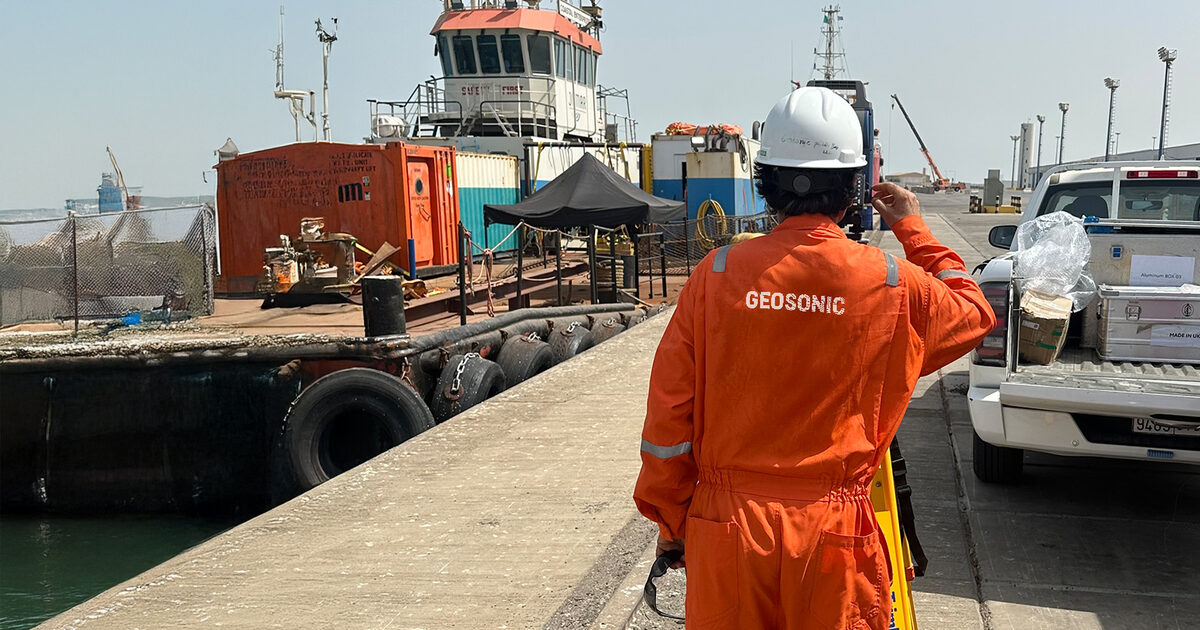
Geosonic to Survey More Than 200 Kilometers of Offshore Pipelines in Turkmenistan
TENDERS
30.04.2026
17.06.2026
Turkmengas Announces Tender for Purchase of Material and Technical Resources

Archabil Avenue 56, Ashgabat, Turkmenistan
01.05.2026
17.06.2026
Türkmennebit Reannounces International Tender for Automated Database System Modernization
Archabil Avenue 56, Ashgabat, Turkmenistan
01.05.2026
19.06.2026
Turkmengas Announces Tender for Purchase of General Plant Equipment
Archabil Avenue 56, Ashgabat, Turkmenistan
16.05.2026
02.07.2026
Türkmennebit Reannounces International Tender for Purchase of General Plant, Technological and Drilling Equipment
Archabil Avenue 56, Ashgabat, Turkmenistan
20.05.2026
03.07.2026
Turkmengas Announces Tender for Purchase of Material and Technical Resources
Archabil Avenue 56, Ashgabat, Turkmenistan
21.05.2026
06.07.2026
Turkmengas Announces Tender for Purchase of General Plant Equipment
Archabil Avenue 56, Ashgabat, Turkmenistan
02.06.2026
13.07.2026
Turkmengas Announces Tender for Purchase of Material and Technical Resources
Archabil Avenue 56, Ashgabat, Turkmenistan
02.06.2026
13.07.2026
Türkmennebit Reannounces International Tender Purchase of Chemical Products and Auxiliary Materials
Archabil Avenue 56, Ashgabat, Turkmenistan


© 2026 All rights reserved.
Contacts
-
 +99312414008
 -
+993 71 62 22 38
-
 R.C. «Gurtly» 63. Ashgabat, Turkmenistan
