
SCRMET
Strong gas prospects in Pakistan and India
DECARBONIZATION
06.05.2026
06 May, 2026
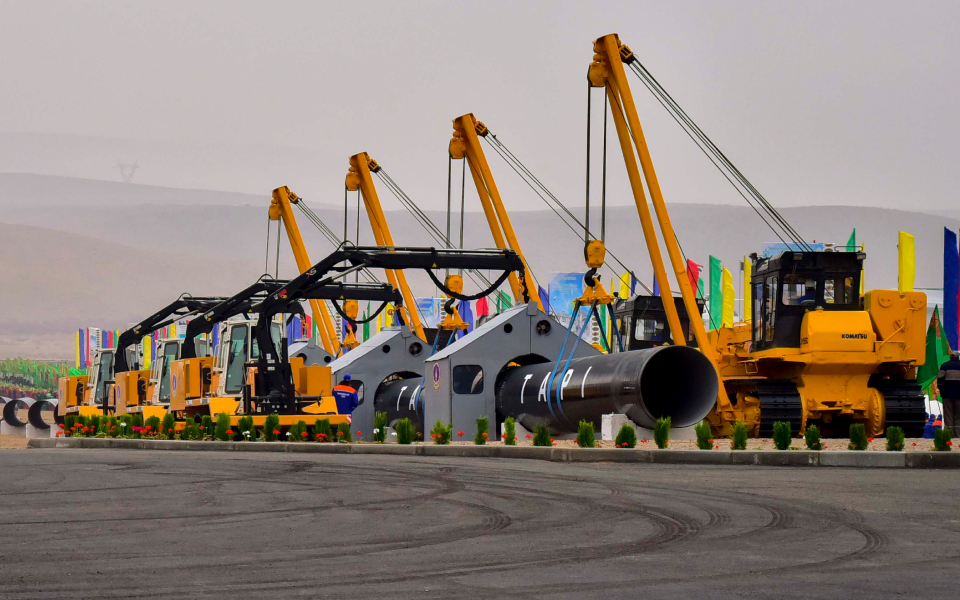
The Turkmenistan–Afghanistan–Pakistan India (TAPI) gas pipeline is moving ahead, with construction activity under way in western Afghanistan and renewed focus on the project’s role in supplying fast-growing South Asian gas markets.
Work along the Afghan section has advanced from the Turkmen border toward Herat, Afghanistan’s third-largest city and a critical waypoint on the 1,800-km route. Currently, right-of-way preparation has been completed for 125 km, around 60 km of pipe has been welded and laid, and more than 600 EPC personnel and 240 items of machinery have been mobilised for construction of the Serhetabat–Herat section of the TAPI pipeline. The Herat segment anchors TAPI’s passage through western Afghanistan before the pipeline continues southeast toward Kandahar and onward into Pakistan. Construction has included route preparation, surveying and initial pipeline works, alongside planning for compressor stations and associated infrastructure. It should also be noted that the 214-km Turkmenistan section up to the Afghanistan border has been completed, and the pipeline is ready for operation.
Progress in this section is strategically important. By advancing construction in discrete stages, project developers are demonstrating that the pipeline can move forward pragmatically, while reinforcing confidence among downstream buyers that supply planning in Pakistan and India can proceed in parallel. Afghan authorities have repeatedly underlined their support for TAPI, citing the project’s contribution to transit revenues, employment and regional economic integration.
As development of TAPI continues, so too does progress on the phased expansion at Turkmenistan’s super-giant Galkynysh gas field, providing the supply to fill the pipeline.
While TAPI’s development through Afghanistan is discussed elsewhere in this magazine, the most compelling commercial opportunities are concentrated in South Asia, where gas demand is rising steadily and domestic supply is increasingly unable to keep pace. At full capacity, TAPI would deliver 14 bcm per year of gas each for Pakistan and India, versus only 5 bcm for Afghanistan.
Asia’s long-term outlook for natural gas remains strong, supported by population growth, industrialisation and the need to balance rapid renewables expansion with reliable power generation. Paul Everingham, CEO of the Asia Natural Gas and Energy Association, said major energy institutions project sustained growth in gas consumption across the region.
«There is a strong growth outlook for natural gas demand in Asia, including for use in power generation as a much lower-emission alternative to coal and oil,» Everingham told Turkmen Energy, citing projections from organisations such as the Institute of Energy Economics, Japan and the US Energy Information Administration, which foresee Asia’s gas use potentially doubling by 2050.
Natural gas plays a central role in energy security strategies for fast-growing Asian economies, Everingham said, particularly as countries seek to integrate intermittent renewable generation while maintaining grid stability. Diversity of supply is critical, encompassing both the geographic origin of gas and the means by which it is delivered.
«For countries that lack the gas resources or production to be self-sufficient, being able to access gas by both pipeline and LNG imports is an optimal situation,» he said.
This diversity underpins the strategic rationale for TAPI. Turkmenistan’s vast gas resources, led by Galkynysh, provide a long-term supply base capable of supporting new pipeline exports alongside existing routes to China. «Continued development of significant regional resources such as the Galkynysh field can play an important role in meeting Asian gas demand over coming decades,» Everingham said. «If TAPI can be completed, it would provide another source of gas supply for India and Pakistan.»
Output decline in Pakistan
Pakistan stands out as a market where additional pipeline supply could play a particularly valuable role. Long a gas-based economy, the country has seen domestic production decline steadily in recent years as mature fields deplete and new discoveries lag demand growth.
Domestic output has increasingly been prioritised for residential consumers, leaving the power sector and industry more exposed to import dependence. As a result, Pakistan has turned to LNG to bridge the gap, but price volatility has at times constrained its ability to secure sufficient volumes.
Swapnil Babele, vice president for upstream research at Rystad Energy, said Pakistan’s gas demand is expected to soften toward around 30 bcm by 2030 before recovering in the mid-2030s. The more significant trend is on the supply side.
Domestic production is forecast to decline from roughly 25 bcm to around 16 bcm, structurally increasing Pakistan’s reliance on imports. «This decline in domestic output will drive higher LNG imports,» Babele said, highlighting affordability as a key consideration for policymakers.
Mr. Everingham said Pakistan’s historical reliance on gas underscores the importance of securing diversified import routes. Demand from the power sector and industry is expected to grow as economic activity expands, reinforcing the case for accessing both LNG and pipeline gas.
«With demand for gas projected to increase from the power sector and industry, being able to access supply from both pipelines and LNG imports would be beneficial for Pakistan,» he said.
Pipeline gas delivered via TAPI could provide Pakistan with an essential supply stream alongside LNG, offering longer-term price stability and reduced exposure to short-term market volatility. Mr. Babele said pipeline volumes from Turkmenistan’s Galkynysh field could help bridge Pakistan’s supply gap, particularly if backed by long-term contracts, while also generating additional transit revenues once the pipeline reaches the Indian border.
Once fully built and supported by durable transit and supply agreements, pipeline gas via TAPI could be competitive with LNG imports, he said. Galkynysh is estimated to contain more than 21 tcm of gas and is being developed in phases specifically aligned with export growth.
An expanded role for gas in India
India’s gas outlook is even larger in absolute terms, though its starting point is different. Gas currently accounts for around 6% of India’s energy mix, reflecting historic constraints on supply availability and pricing rather than a lack of policy ambition.
The Indian government has set a target to increase gas’s share to 15% by 2030 as part of broader efforts to lower emissions, improve air quality, and support industrial growth. While that target is challenging, momentum is building across several demand segments.
Mr. Babele said India’s gas demand is expected to rise from about 65 bcm in 2025 to roughly 105 bcm by 2035. Growth will be driven by industry, fertilisers, city-gas distribution, transport fuels and increased use of gas in power generation.
Gas’s share in India’s energy mix is expected to increase to 8-9% by 2030, according to Rystad, reflecting incremental progress toward a more gas based economy even if the 15% government target is missed. Domestic production is forecast to grow only modestly, reaching around 38 bcm, leaving India structurally short of supply.
As a result, LNG imports will continue to play a central role. But affordability remains a constraint, particularly for sectors such as fertilisers and power generation, where gas competes directly with coal.
Mr. Everingham said demand from Indian industry, especially fertiliser production, is projected to grow significantly through to 2050. Securing access to reliable and competitively priced gas will be critical to sustaining that growth.
In this context, pipeline gas from Turkmenistan could complement LNG by diversifying India’s import portfolio. Access to multiple supply routes would help reduce exposure to global price swings and enhance energy security.
Covering the supply gap
«For both countries, affordability and policy support will be as critical as supply security amid rising LNG import reliance,» Babele said. Pipeline gas delivered via TAPI could play a role in covering this supply gap.
Galkynysh’s development strategy supports this vision. . The phased development of Galkynysh is closely aligned with Turkmenistan’s long-term export strategy, supporting existing supplies to China while creating the resource base for future export routes, including TAPI.
This alignment between upstream expansion and downstream demand reinforces the commercial logic of the project. For Turkmenistan, TAPI would broaden export options beyond a single dominant market, while strengthening economic ties with South Asia.
For Pakistan and India, the pipeline represents an opportunity to anchor long-term gas supply from one of the world’s largest resource bases, complementing LNG imports and supporting economic growth, energy security, and emissions reduction objectives.
As Asia’s gas demand continues to rise and domestic supply struggles to keep pace, projects such as TAPI underline the enduring role of natural gas in the region’s energy transition. With construction advancing in Afghanistan and demand fundamentals strengthening in South Asia, the pipeline’s strategic relevance is becoming increasingly clear.
Environmental and Sustainability Case
Turkmenistan places strong emphasis on environmental considerations and regards natural gas as a cleaner transition fuel capable of supporting economic growth while lower-carbon and renewable energy sources are progressively developed. Compared with coal, natural gas produces significantly lower carbon dioxide emissions when used in power generation and can support emissions reduction where it replaces more carbon-intensive fuels. In this context, the TAPI Pipeline Project can make a meaningful contribution to regional energy security while supporting environmental sustainability. The pipeline route has been selected following environmental and social impact assessments and stakeholder consultations, seeking to avoid sensitive environmental areas as far as practicable. The project is being developed in line with international industry standards and regulatory requirements and will implement comprehensive mitigation, management and monitoring measures.
Advanced pipeline design and construction technologies, together with robust emergency response planning, will further reduce environmental risks. Beyond emissions reduction, TAPI also has the potential to help address severe indoor air pollution caused by the use of biofuels for cooking, a major public health challenge identified by the World Health Organisation. By expanding access to natural gas, the project can contribute to lower indoor pollution, improved health outcomes and reduced mortality. Taken together, these factors underline TAPI’s role in supporting emissions reduction, improving environmental and public health outcomes, and contributing to the climate and sustainability objectives of the TAPI countries, including those set out under the Paris Agreement.
VISIT ALSO

TOP NEWS
INDUSTRY NEWS
13 Aug, 2026

INTERVIEWS
06 May, 2026
Strengthening Global Energy Dialogue: The Investor on Turkmenistan’s Rising Investment Profile
ENERGY
03 Jul, 2026
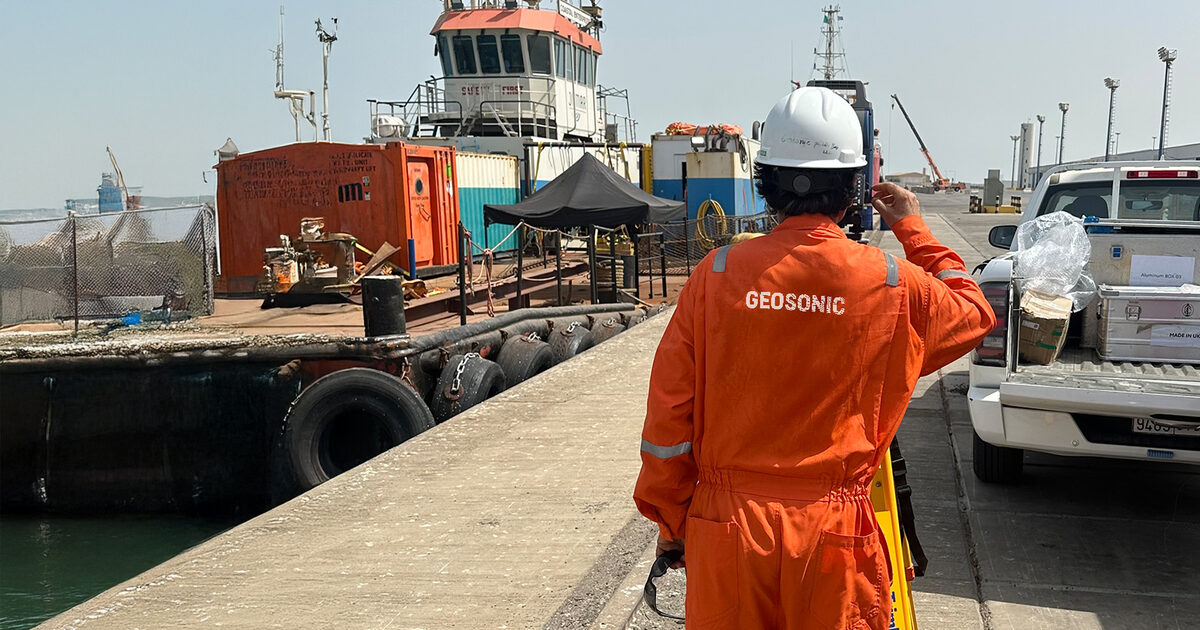
Geosonic to Survey More Than 200 Kilometers of Offshore Pipelines in Turkmenistan
TENDERS
30.04.2026
17.06.2026
Turkmengas Announces Tender for Purchase of Material and Technical Resources

Archabil Avenue 56, Ashgabat, Turkmenistan
01.05.2026
17.06.2026
Türkmennebit Reannounces International Tender for Automated Database System Modernization
Archabil Avenue 56, Ashgabat, Turkmenistan
01.05.2026
19.06.2026
Turkmengas Announces Tender for Purchase of General Plant Equipment
Archabil Avenue 56, Ashgabat, Turkmenistan
16.05.2026
02.07.2026
Türkmennebit Reannounces International Tender for Purchase of General Plant, Technological and Drilling Equipment
Archabil Avenue 56, Ashgabat, Turkmenistan
20.05.2026
03.07.2026
Turkmengas Announces Tender for Purchase of Material and Technical Resources
Archabil Avenue 56, Ashgabat, Turkmenistan
21.05.2026
06.07.2026
Turkmengas Announces Tender for Purchase of General Plant Equipment
Archabil Avenue 56, Ashgabat, Turkmenistan
02.06.2026
13.07.2026
Turkmengas Announces Tender for Purchase of Material and Technical Resources
Archabil Avenue 56, Ashgabat, Turkmenistan
02.06.2026
13.07.2026
Türkmennebit Reannounces International Tender Purchase of Chemical Products and Auxiliary Materials
Archabil Avenue 56, Ashgabat, Turkmenistan


© 2026 All rights reserved.
Contacts
-
 +99312414008
 -
+993 71 62 22 38
-
 R.C. «Gurtly» 63. Ashgabat, Turkmenistan
